
Introduction
Agriculture is changing as farmers look for better ways to grow crops, save resources, and manage unpredictable weather. Traditional farming methods often depend on experience and visual observation. While these methods remain valuable, they may not provide enough information to handle modern agricultural challenges. Climate change, irregular rainfall, rising temperatures, and water shortages have made accurate environmental monitoring more important than ever. This is where meteorological technology plays an important role in smart agriculture. By using a reliable weather station and advanced environmental sensors, farmers can collect real-time information about weather and soil conditions. These insights help them make better decisions about irrigation, planting, fertilization, and crop protection.
Smart agriculture combines technology, environmental data, and modern farming practices to improve productivity and reduce waste. Companies such as Rika Sensor support this development by providing weather monitoring equipment, agricultural sensors, and customized environmental monitoring solutions. With more than 15 years of experience in sensor manufacturing and environmental monitoring, Hunan Rika Electronic Tech Co., Ltd. offers products designed for different monitoring needs. Its product range includes weather stations, anemometers, barometers, thermometers, rain gauges, soil sensors, and water sensors. These technologies help agricultural projects understand changing environmental conditions and build more efficient farming systems.
The Role of Meteorological Technology in Smart Agriculture
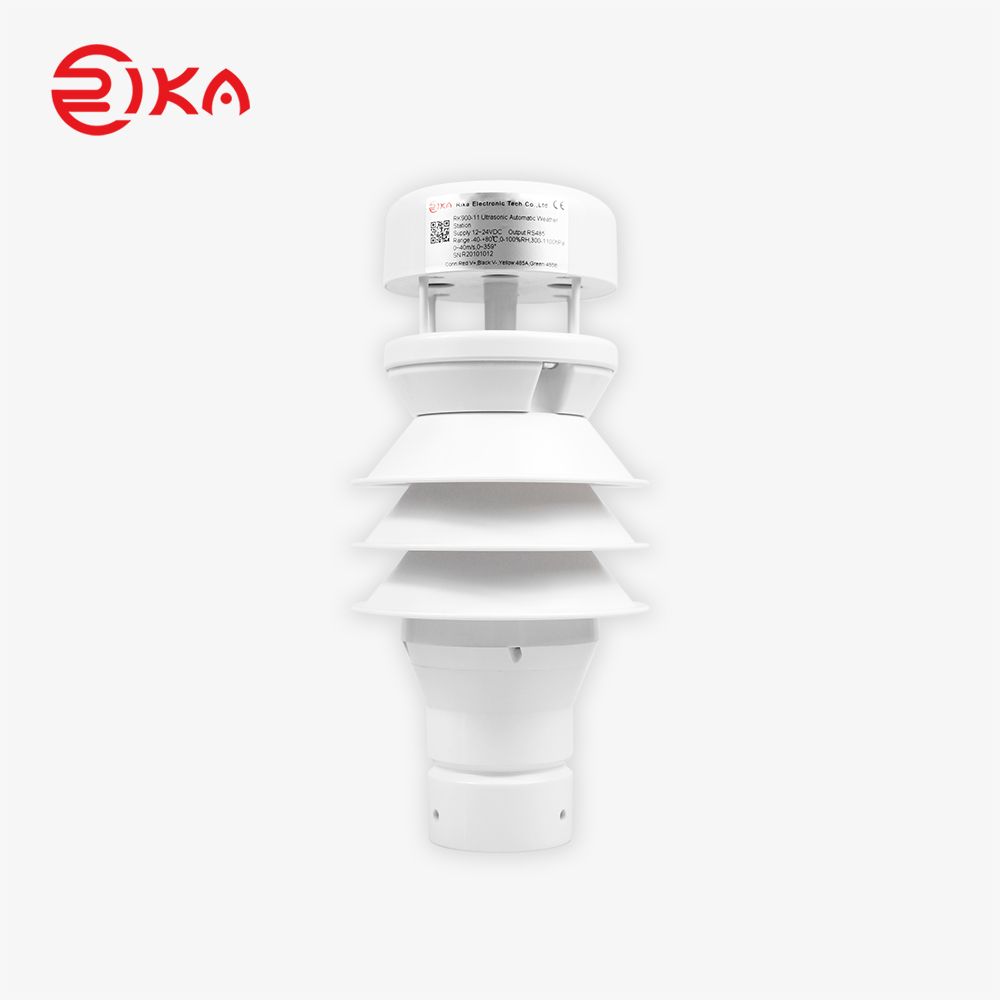
Meteorological technology helps farmers understand the environmental conditions that affect plant growth. Temperature, humidity, wind speed, wind direction, rainfall, and solar radiation all influence crop development. Without accurate measurements, farmers may find it difficult to determine the best time for irrigation, pesticide application, or harvesting. A modern weather station collects important weather information and provides data that can support daily agricultural decisions. For example, temperature and humidity readings help farmers understand conditions that may increase the risk of crop diseases. Rainfall measurements can also show whether crops are receiving enough natural water or require additional irrigation. By monitoring these factors, agricultural businesses can reduce uncertainty and improve farm management.
Smart farming systems use environmental monitoring equipment to turn raw measurements into useful information. When weather sensors work together with digital monitoring platforms, farmers can observe changing conditions and respond more quickly. This approach is especially useful for large farms, greenhouses, orchards, and agricultural research projects. Instead of depending only on fixed irrigation schedules or general weather forecasts, farmers can use local environmental measurements to understand what is happening in their fields. Rika Sensor provides weather monitoring instruments and environmental sensors that can support these applications. By selecting suitable equipment for each project, agricultural users can create monitoring systems that match their crops, field conditions, and operational requirements.
How Weather Stations Improve Agricultural Decision-Making
A professional weather station can provide several types of environmental information in one monitoring system. Common measurements include air temperature, relative humidity, wind speed, wind direction, atmospheric pressure, and precipitation. Some agricultural monitoring projects also require solar radiation and other environmental measurements. These readings help farmers understand local weather patterns instead of relying entirely on information from distant weather stations. For example, a sudden increase in temperature combined with low humidity may indicate a higher risk of water stress. Strong winds may affect spraying operations, while heavy rainfall can increase the risk of soil erosion and waterlogging. Having access to accurate local data allows farm managers to plan activities with greater confidence.
Weather monitoring also supports better long-term agricultural planning. By collecting environmental data over weeks, months, and growing seasons, farmers can identify patterns that influence crop performance. This information can help them compare growing conditions, evaluate irrigation practices, and prepare for seasonal weather changes. A reliable weather station is therefore more than a tool for checking daily conditions; it can become an important part of a farm's environmental data system. Rika Sensor offers weather instruments that can be selected according to different project requirements. Its experience in developing monitoring solutions also supports customers who need specific physical properties, electrical input and output configurations, or product packaging to suit their agricultural applications.
Soil and Water Sensors for Precision Irrigation
Water management is one of the most important parts of successful agriculture. Too little water can slow plant growth, while excessive irrigation can waste resources, damage roots, and reduce soil quality. Precision irrigation uses environmental measurements to help farmers supply water according to actual field conditions. Soil moisture sensors are particularly useful because they measure the amount of water available in the soil. When these sensors are installed in suitable locations and depths, farmers can monitor changes in soil moisture and decide when irrigation is needed. Combining soil moisture information with temperature, humidity, and rainfall data from a weather station can provide a clearer understanding of crop water requirements.
Water sensors also help agricultural projects monitor important water conditions in irrigation systems, storage facilities, and other water-related applications. Together, soil and water monitoring technologies support more responsible resource management. For example, farmers can use sensor readings to adjust irrigation schedules after rainfall rather than following an unnecessary fixed routine. This can reduce water consumption, lower operating costs, and support healthier crop development. Rika Sensor offers soil sensors and water sensors as part of its environmental monitoring product range. These instruments can be considered when designing smart irrigation systems, agricultural research facilities, and precision farming projects that require dependable environmental information.
Choosing the Right Meteorological Equipment for Agricultural Projects
Selecting suitable monitoring equipment is essential for achieving reliable results. Every agricultural project has different requirements depending on its location, crop type, field size, climate, and monitoring objectives. A greenhouse may need continuous temperature and humidity monitoring, while an outdoor farm may require rainfall, wind, solar radiation, and soil moisture measurements. Agricultural research projects may need a wider range of environmental instruments to study the relationship between weather conditions and crop development. Before selecting a weather station, project managers should consider measurement accuracy, sensor range, installation requirements, power supply, communication options, and maintenance needs. The equipment should also be suitable for the local environment and capable of providing consistent readings over time.
Working with an experienced sensor manufacturer can make equipment selection easier, especially when a project requires customized monitoring solutions. Rika Sensor, officially known as Hunan Rika Electronic Tech Co., Ltd., has more than 15 years of experience in environmental and weather monitoring. The company supplies weather stations and instruments for agricultural, renewable energy, green building, coastal research, and other monitoring applications. Its products have been exported to more than 100 countries and regions, reflecting its international experience in serving different markets. Rika Sensor also develops customized products to meet specific customer requirements. With attention to product quality, technical support, timely delivery, and after-sales service, the company aims to help customers develop practical monitoring systems for their projects.
Conclusion
Meteorological technology is becoming an important part of modern agriculture because it helps farmers understand the environmental conditions that influence crop growth. A reliable weather station, combined with soil moisture sensors, water sensors, and other weather instruments, provides useful information for irrigation planning, crop protection, and agricultural research. These technologies help farmers move from traditional guesswork toward data-driven decisions. As a result, smart agriculture projects can improve resource efficiency, reduce unnecessary costs, and respond more effectively to changing weather conditions. Accurate environmental monitoring also supports long-term planning by allowing agricultural businesses to study weather patterns and understand the needs of their fields.
For agricultural businesses, research organizations, and smart farming developers, choosing dependable monitoring equipment is an important step toward building successful projects. Rika Sensor offers a broad selection of weather monitoring instruments and environmental sensors backed by more than 15 years of industry experience. Its ability to provide standard products and customized solutions makes it a potential technology partner for different agricultural monitoring needs. As precision farming continues to develop, the combination of meteorological technology and intelligent environmental monitoring will play an increasingly valuable role in creating productive, efficient, and sustainable agricultural systems. Investing in the right monitoring solution today can help farms make better decisions and prepare for the agricultural challenges of tomorrow.